 PHX Mold Removal
 Black Mold Removal in Phoenix: Facts First, Then the Fix
Found dark mold in your Phoenix home? Here’s the calm version: “black mold” (Stachybotrys chartarum) is one of many dark-colored molds, color alone can’t identify it, and the correct response is the same regardless of species, fix the water source and remove the growth under proper containment. What you shouldn’t do is panic, and what you really shouldn’t do is pay a panic premium to a company using the words “toxic black mold” as a sales weapon.
What black mold actually is
Stachybotrys chartarum is a greenish-black mold that colonizes cellulose materials (drywall paper, ceiling tiles, wood fiber) that stay wet for an extended period. Two facts matter for homeowners:
- It’s a chronic-moisture mold. Stachybotrys doesn’t show up after one splash. It needs material that’s been wet for days to weeks. Finding it is less a mold emergency than a water emergency, somewhere, a leak has been running for a while.
- Most “black mold” isn’t Stachybotrys. Cladosporium, Alternaria, Aspergillus niger, and everyday mildew all read as black or near-black to the eye. Lab analysis of a surface sample is the only way to know, and for the removal decision, it usually doesn’t matter.
On health: mold, dark or otherwise, can aggravate allergies and asthma. Specific health questions belong with your doctor. Be wary of any contractor who diagnoses your family’s symptoms from your drywall; that’s a sales tactic, not science.
Why dark mold gets the full containment treatment anyway
If species doesn’t change the decision, why does heavy dark growth get careful handling? Because heavy established growth of any species means a large spore reservoir and a long-running moisture source, and disturbing it without containment broadcasts spores through the house, straight into the return air if the growth is anywhere near your air handler, which in Phoenix it very often is.
The removal protocol follows the IICRC S520 standard, same as any mold remediation:
- Seal the area, 6-mil poly containment, HVAC vents in the zone blocked.
- Negative air, HEPA air scrubbers exhausting out of containment so airflow always runs into the work zone.
- Remove, don’t treat: contaminated drywall, insulation, and other porous materials cut out and double-bagged inside containment. Framing lumber gets HEPA-sanded and damp-wiped to sound wood.
- HEPA clean, every surface in the zone vacuumed and wiped.
- Dry, meters confirm the structure is at dry standard, because leftover moisture restarts the clock.
- Clearance, independent air sampling confirms the zone is back to normal before containment comes down. Details on the testing page.
Where it shows up in Phoenix homes
Stachybotrys needs sustained wetness, and Phoenix houses supply it in predictable places:
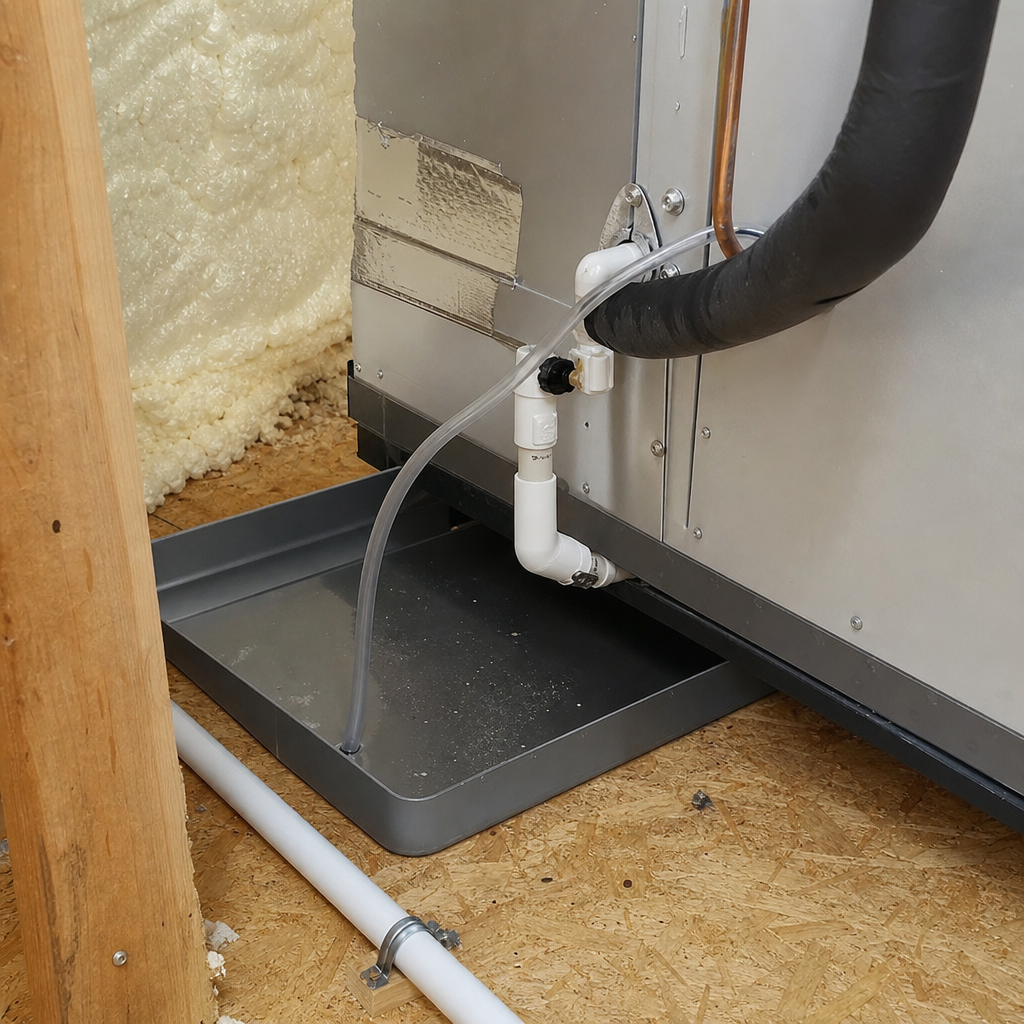
- AC closets. The number-one location. A condensate drain line clogs in June, drips all summer behind the air handler, and by October there’s established dark growth on the closet drywall. If this is your situation, read the AC and HVAC mold page. The closet is the highest-stakes place in the house to disturb mold, because it feeds your return air.
- Behind shower surrounds. Failed grout, cracked pans, and original 1990s tile assemblies leak into the wall cavity for years. The mold is discovered during a remodel, and it’s often the most established growth in the house. Common in Ahwatukee’s 1980s–90s bathrooms and Laveen’s now-20-year-old boom-era builds.
- Under slow roof leaks. Monsoon water past aged underlayment wets the same patch of decking and ceiling drywall storm after storm, season after season. See monsoon and roof leak mold.
- Wall bases over slab leaks. A pinhole slab leak wicks up into the bottom plate and lower drywall, a pattern common in Arcadia’s 1950s ranches and other older-stock neighborhoods, where the growth hides behind baseboards.
- Behind refrigerators and washing machines. A slow icemaker line or hose drip against drywall that nobody moves an appliance to check.
The fear-pricing problem, and the answer to it
“Black mold” is the most abused phrase in this industry. The playbook: a free inspection finds dark growth, the word “toxic” gets used within the first minute, and a job worth $2,000 is quoted at $8,000 to a frightened family the same afternoon.
Two tells give the fear-pricers away. First, the quote arrives before any moisture investigation, if nobody metered a wall or asked where the water came from, the number was invented, not calculated. Second, the price jumps the moment the words “black mold” are confirmed, even though the containment protocol, labor, and disposal are identical to any other established growth.
Our position is simple. Dark mold costs the same to remove as any other mold, because the work is the same. Phoenix ranges: small contained areas $500–$1,500, typical jobs $1,500–$3,500, larger multi-room projects up to $6,500. The full breakdown is public on the pricing page. If a growth is small, on a hard surface, and cleanable with detergent and gloves, that is a Saturday job, not a contract.
Arizona makes vigilance your job: there is no state mold license, so nothing legally stops fear-based operators from working here. Vet every company (us included) on IICRC certification, containment practices, and independent clearance testing.
What to do right now if you’ve found dark growth
- Don’t scrub it, don’t spray it, don’t fan it. Disturbance spreads spores. Bleach on drywall doesn’t kill roots and adds moisture.
- Kill the water if you can find it. Shut the angle stop under a leaking fixture; shut the main if you suspect a supply leak.
- Close off the room if possible and, if growth is near the air handler or a return, consider switching the HVAC fan off until it’s assessed.
- Photograph everything, for insurance and for your own timeline. Coverage often turns on proving the water event was sudden, not gradual.
- Get a free assessment. Describe the growth, location, and any known leaks in the quote form. We flag active water as urgent anywhere in the Phoenix neighborhoods we cover, and we will give you a straight answer about whether this is a professional job or a Saturday-morning one.
Frequently Asked Questions
Is all black-colored mold toxic black mold?
No. Many common molds are dark (Cladosporium, Alternaria, Aspergillus niger) and aren't Stachybotrys chartarum, the species people mean by 'toxic black mold.' Color can't identify a species; only lab analysis can. The practical response is the same either way: fix the water, remove the growth properly.
Do I need special testing before removing black mold?
Not usually. Visible mold gets removed with the same containment protocol regardless of species, so identification rarely changes the work. Testing makes sense when you need documentation for insurance, a landlord dispute, or a home sale, or when someone in the home has health concerns their doctor wants investigated.
Can I remove black mold myself with bleach?
Small growth on hard non-porous surfaces, yes, though detergent works as well as bleach. On drywall or wood, no: bleach doesn't reach roots in porous material, and scrubbing without containment launches spores into the air. Dark heavy growth on drywall is a removal job, not a cleaning job.
Where does black mold show up in Phoenix homes?
The chronic-moisture spots: AC closets with long-running condensate leaks, behind shower surrounds with failed grout or pans, ceiling/attic areas under slow roof leaks, and wall bases over slab leaks. Stachybotrys in particular needs sustained wetness, so finding it means the leak has been active a while.
How much does black mold removal cost in Phoenix?
The same as remediation of any mold, because the process is the same: typically $1,500–$6,500 depending on scope, with small contained areas running $500–$1,500. Companies that charge a 'toxic mold premium' for the same containment protocol are charging for fear.